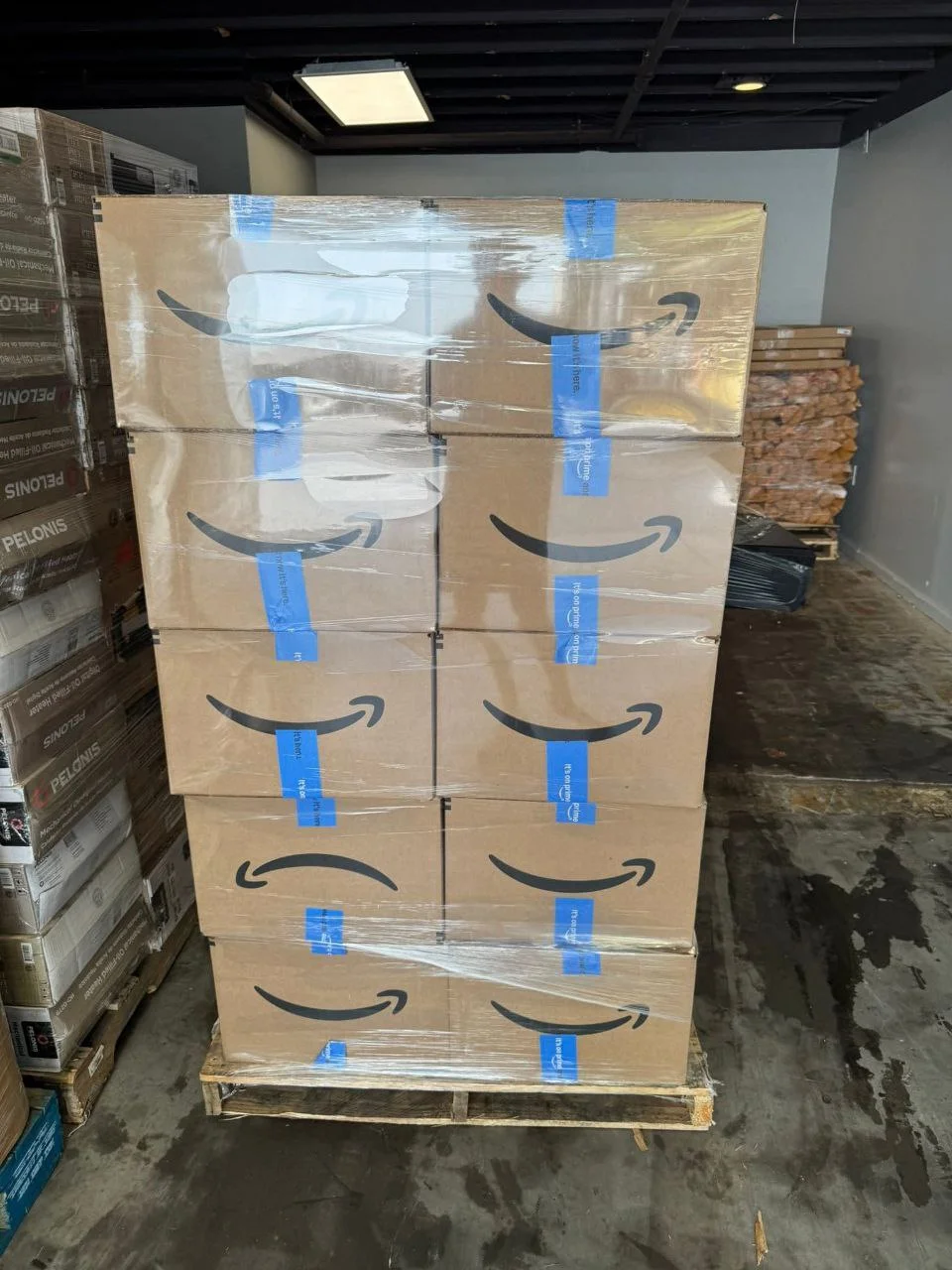
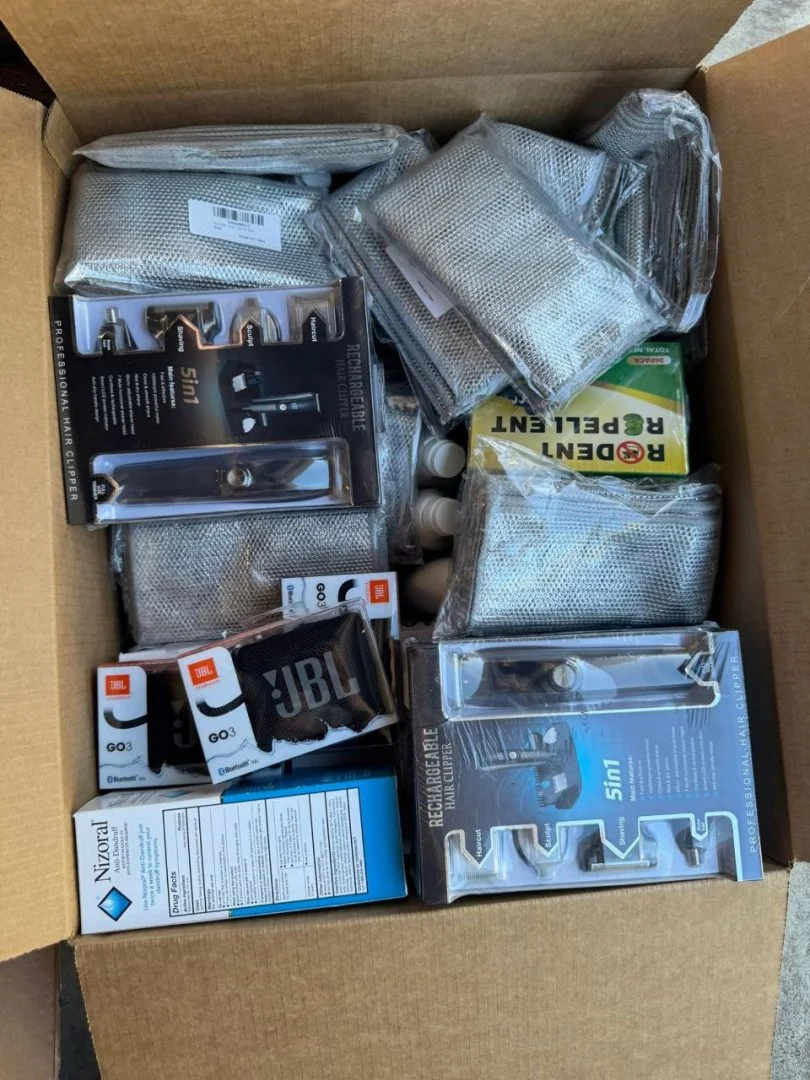
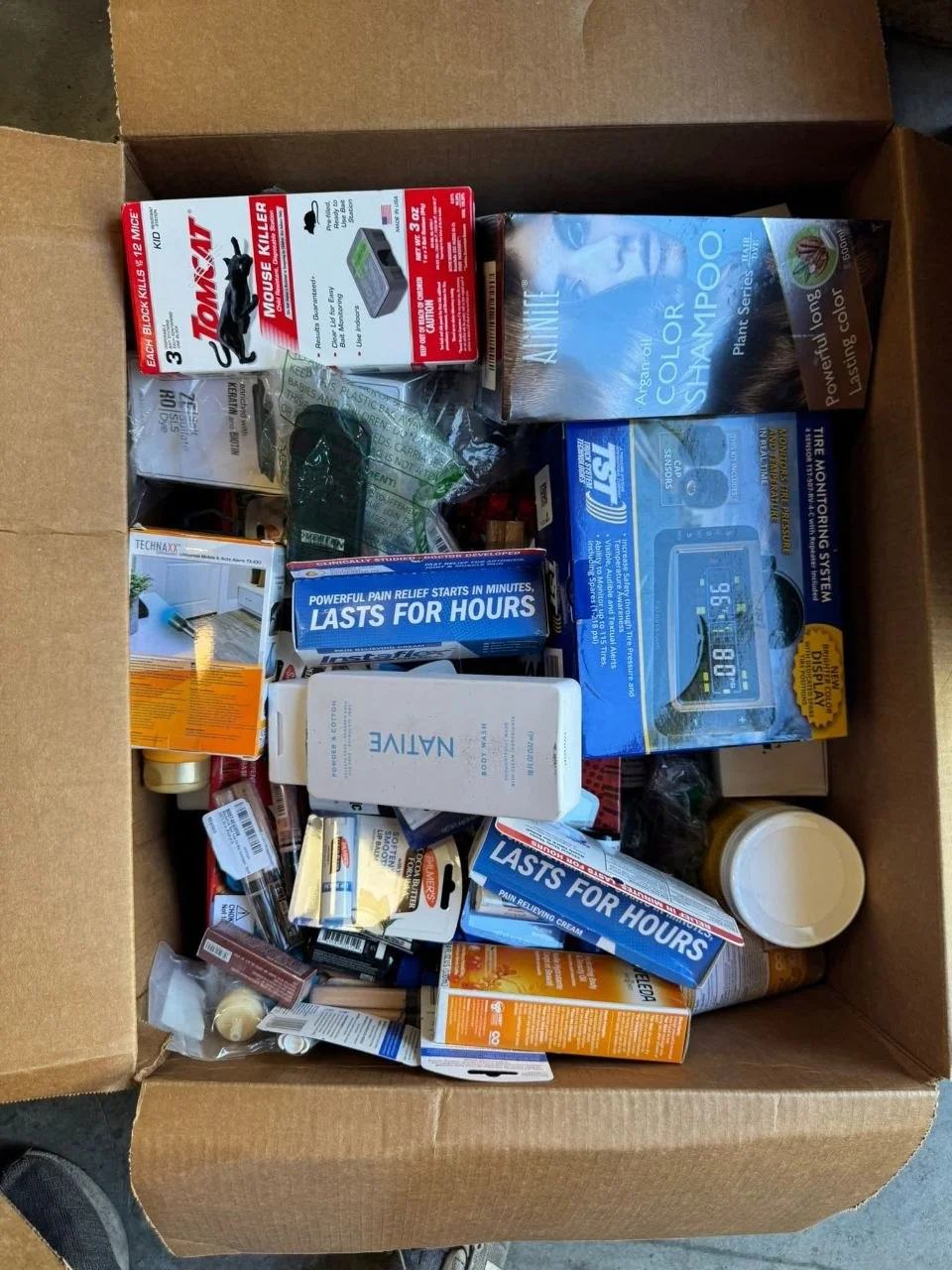
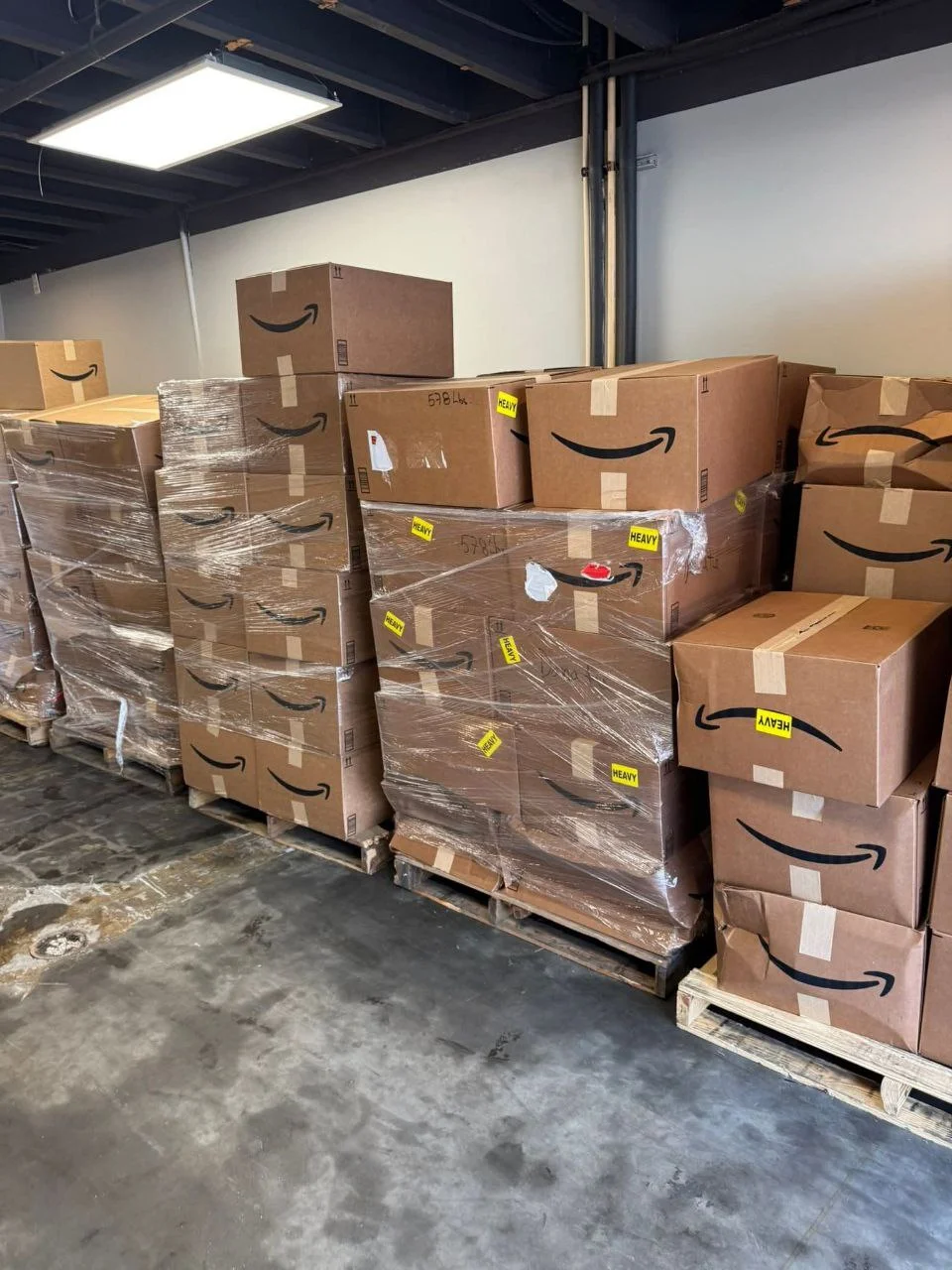
Buy Mystery Box Pallet (50+ Assorted Items From $50) per box
Original price was: $75.00.$50.00Current price is: $50.00.
Current Price: From $180
Status: In Stock – Limited Quantity
Seller: Verified Amazon Overstock Liquidator
Source: Amazon Returns, Overstock & Shelf Pulls
Condition: Mixed – 70% Brand New, 20% Like-New, 10% Customer Returns
Items per Pallet: 50+ (Electronics, Apparel, Home, Toys & Beauty)
Estimated Retail Value: Up to $1,200+
Return Policy: Final Sale – Buyer Protection Available
Packaging: Sealed Mystery Boxes (Freight Wrapped)
Shipping Area: Fast Freight Delivery Worldwide (2–3 Business Days)
Description
Key Takeaways
- Trust is Paramount: Never buy a pallet without a verifiable paper trail or from an established liquidator like Largo Pallets.
- The Price is Right: Your target acquisition cost should be 10% to 20% of the Estimated Retail Value (ERV).
- Strategy Beats Luck: Focus on high-value, high-demand categories (like electronics or tools) that align with your processing capacity.
- Freight Matters: Map out local pickup options to eliminate the highest risk variable in your COG.
Ready to stop gambling and start building a reliable profit engine? Don’t miss out on the best inventory before it’s gone.
Request a Quote on a Manifested Amazon Pallet Today.
Amazon Mystery Box Pallet
A true Amazon Mystery Box Pallet is simply a liquidation lot of unsorted customer returns from Amazon’s vast fulfillment centers. While the term “mystery box” is a viral nickname, the product is a standard industry item: untested or uninspected return merchandise.
This pallet type has gone viral because it represents the highest risk-reward scenario in reselling. Resellers are drawn to the low cost and the potential for “hidden gems”—high-value electronics or premium home goods that a customer simply sent back for a minor reason. These pallets are the overflow of Amazon’s reverse logistics system. They contain everything from new-in-box items to damaged or incomplete goods. Common categories include electronics, small kitchen appliances, home décor, and seasonal fashion.
The key to success with these pallets is volume and processing speed. If you can efficiently sort, test, and relist hundreds of items, the odds of covering your cost and generating a significant profit are overwhelmingly in your favor.
Selling Point For Amazon Mystery Box Pallet.
Ready to transform raw inventory into immediate cash flow? Our expertly sourced Amazon liquidation pallets offer the highest density of sought-after merchandise, curated for profitable resale. Don’t wait for the next auction—check our current inventory now and secure your edge.
Are Amazon Mystery Boxes A Scam?
The short answer is: the legitimate product is real, but the online marketing around it is often a scam. The problem isn’t the pallet itself, but the individuals or fly-by-night websites promising “guaranteed iPhones” or unrealistic 1,000% profit margins for a low, flat fee.
Scam signals are clear. They include sellers demanding payment through untraceable methods, websites with broken links and no physical address, or aggressive social media ads promising access to “Amazon’s secret vault.” When working with a trusted partner like Largo Pallets, you bypass this risk. We provide transparent pricing, clear manifests, and verified sourcing to eliminate the element of fraudulent mystery.
Does Amazon Sell Mystery Pallets?
No, Amazon does not sell liquidation pallets directly to the public. They operate massive, sophisticated liquidation programs that move volume through established channels—primarily large, authorized B2B liquidators or specialized online auction marketplaces.
Amazon’s goal is to efficiently clear warehouse space, not manage individual pallet sales to thousands of resellers. The pallets you see on our site originate from these official programs. They reach us because we have the verified infrastructure, logistical capacity, and buying power required to purchase their volume. The absence of a direct-to-consumer program is why relying on verified liquidators is the only safe way to access this inventory. For a deeper dive into the scale of reverse logistics, the U.S. Environmental Protection Agency (EPA) provides essential data on managing large volumes of product returns, which underscores the need for professional liquidators to handle this flow. [Hyperlink to a relevant EPA page on waste management or sustainable materials management].
How Much Does It Cost To Buy An Amazon Return Pallet?
The price of an Amazon return pallet is not fixed; it’s a dynamic negotiation based on several crucial factors. The central principle is always the Estimated Retail Value (ERV) of the goods inside. The final price you pay is a fraction of that ERV, usually ranging from 5% (for poor condition) to 20% (for excellent, well-manifested stock).
Pricing is heavily influenced by the Condition Grade (A, B, C, D), the Product Category (electronics are pricier than apparel), and crucially, the Freight Class and Shipping Fees. Never look at the pallet price in isolation. Factor in your entire cost of goods (COG) plus shipping to get your real break-even point.
The table below illustrates how pricing changes based on the condition of the inventory.
| Pallet Condition Grade | Typical Product State | Price Range (% of ERV) | Reseller Strategy |
| A (New/Like New) | Unopened, minimal damage, customer changed mind. | 15% – 20% | High-margin, quick flipping. Focus on major platforms. |
| B (Minor Damage) | Lightly used, opened box, minor cosmetic flaws. | 10% – 15% | Requires light cleaning/repair. Ideal for refurbishment. |
| C (Used/Salvage) | Used, potential functional issues, parts missing. | 5% – 10% | Bulk sorting for parts or low-end bundles. High labor. |
| D (Heavy Salvage) | Broken, non-functional, high probability of scrap/parts. | 1% – 5% | For professional dismantlers and component harvesting. |
This table provides an overview of how pricing correlates with the condition of Amazon return stock. Understanding these grades is critical, as a lower price often means significantly higher labor costs to process the goods.
Things To Check Before Buying An Amazon Return Pallet?
Before you request a quote or click “Buy Now,” you need a tactical checklist. Treat this as an investment in your business, not a shopping trip.
- Budget & COG: How much can you spend, including the cost of the pallet and freight?
- Storage Space: Do you have the dry, secure space to process an 8-foot pallet of boxes?
- Resale Platforms: Which items from the manifest are best for eBay vs. Facebook Marketplace vs. Amazon FBA?
- Logistics: Do you need a liftgate service for delivery? What is the freight class?
Due diligence starts with the seller. A reputable liquidator will always offer clear photos, sample manifests, and a paper trail back to the sourcing program. If a seller is hesitant to provide this, walk away.
Evaluating The Condition Of Amazon Warehouse Return Pallets
Since you often buy blind, the manifest and seller description are your only windows into the product’s condition.
- Read the Manifest Key: Look for coded language like “NIB” (New In Box), “OS” (Open Stock), or “TS” (Tested and Sorted).
- Seller Rating & History: Review testimonials and case studies. For instance, a long-standing liquidation partner is inherently more trustworthy than a newly launched site.
- Post-Arrival Inspection: Once the pallet arrives, document everything. Take photos of the shrinkwrap, the exterior condition, and the process of opening and sorting. This is crucial for insurance claims or disputes. A reputable partner like Largo Pallets will have a clear, official return or claim policy, which you can often find linked to their official business registration, demonstrating authority and trust. [Hyperlink to a relevant business authority or BBB page for a large, non-competitor liquidator (e.g., B-Stock or a major auction house)].
Are Mystery Boxes Worth The Money?
Yes, they are worth the money, but only for the strategically minded reseller. For personal consumption or the casual buyer, the risks often outweigh the benefits. For a business, the pros are clear:
- Low Buy-In: The low acquisition cost creates enormous profit potential if a few high-value items are found.
- Variety and Inventory Freshness: You get a constantly changing inventory that keeps your resale channels dynamic and engaging.
However, the risk is real. You are essentially betting that the value of the good items offsets the cost of the duds, plus your labor. A successful reseller views the low-value items (the “duds”) as simply part of the processing cost, not a total loss.
What Are The Risks Of Buying Mystery Boxes?
Successful resellers must look past the hype and address the practical risks head-on.
| Risk Category | Description | Mitigation Strategy |
| Financial Risk | Pallet cost + freight exceeds the eventual resale value of the profitable items. | Strictly adhere to the COG rule (Max 20% of ERV). Source manifested pallets when possible. |
| Practical Risk | Inventory contains large, unsaleable items, requiring costly disposal or storage. | Know your freight class. Avoid bulky items if you don’t have commercial loading docks. |
| Emotional Risk | The “gamble” leads to poor impulse purchases and fatigue from processing low-value goods. | Set clear processing goals: Test 25 items per day. Treat it like a job, not a treasure hunt. |
For example, a common complaint is the volume of unusable cables or fast-fashion apparel. A professional reseller either bundles these for a nominal fee or accepts the cost of disposal as a business expense.
Where To Find Amazon Pallets For Sale?
The most trusted channels for purchasing Amazon liquidation pallets are through large, verified B2B marketplaces and established, authorized liquidators like Largo Pallets.
- Auction Marketplaces: These are often private sites run by Amazon’s liquidation partners, allowing you to bid on specific manifests.
- Fixed-Price Liquidators: Companies like ours purchase large lots and break them down into smaller, curated pallets for B2B buyers, offering a transparent, immediate purchase option.
Always check a potential supplier’s history of managing high-volume logistics. The ability to handle freight and process thousands of units annually is a powerful indicator of their authority in the industry.
Broaden The Net With Multi-Retailer Exchanges
While “Amazon” has brand appeal, sometimes the most profitable pallets come from multi-retailer exchanges. These platforms sell liquidation stock from Target, Walmart, and other major retailers.
- Pros of Multi-Retailer: Often less competitive bidding, diverse inventory, and higher-quality stock from smaller return pools.
- Cons of Multi-Retailer: Less recognizable brand name for immediate resale; requires more general knowledge of product categories.
For a deeper understanding of retail logistics and returns, official government resources often provide excellent context on the supply chain. You can review documentation from the U.S. Census Bureau to understand the scale of national retail sales and returns, providing authoritative data on the market size. [Hyperlink to a relevant U.S. Census Bureau page on retail trade statistics].
What Is The Amazon Return Pallet Program?
The Amazon Return Pallet Program is not a single public portal but the entire, multi-tiered infrastructure Amazon uses for reverse logistics. When a customer returns an item, it enters this system.
- Initial Sort: Items are quickly graded as A (Restockable), B (Damaged Box/Used), or C/D (Salvage/Unsellable).
- Internal Clearance: A-grade items are often restocked or sold via Amazon Warehouse Deals.
- Liquidation Channel: The vast majority of B, C, and D-grade inventory is bundled into truckloads and sold to authorized liquidators.
These programs fuel the secondary market by pushing out massive volumes of products that are simply too time-consuming or costly for Amazon to process back into their main sales channel. This is your opportunity.
How Do Amazon Warehouse Returns End Up In Pallets?
It’s a process driven by dollars and cents. Amazon’s priority is fast cycle time. If an item takes too long to inspect, photograph, and relist, it costs more in labor and warehouse space than it’s worth.
Therefore, millions of products—many perfectly functional—are consolidated into pallets, sold quickly, and shipped out to make room for new inventory. This efficiency in the reverse supply chain is why the liquidation industry exists and is so profitable for the end buyer.
How To Source Return Pallets Strategically?
Sourcing strategically is how you turn a gamble into a predictable profit center. Experienced buyers don’t buy what they see; they buy what the data says will sell.
- Seasonal Inventory: Buy winter goods in summer (when prices are lowest) and hold them until demand spikes.
- High-Demand Categories: Focus on product categories that consistently see high resale value (e.g., tools, Apple accessories, name-brand clothing).
- Timing: Buy when a liquidator is clearing out older stock. This is when the steepest discounts occur.
Data-driven sourcing means analyzing your own sales history. Which item categories do you process fastest? Which have the lowest return rate? The answers should guide your pallet purchases.
Match The Pallet To Your Operational Capability
A small-scale seller should not buy a truckload of oversized furniture returns. This is a common, costly mistake.
| Capability Factor | Small Reseller (Etsy/eBay) | Commercial Reseller (Website/FBA) |
| Pallet Size | Single, shrink-wrapped pallet (LTL) | Full Truck Load (FTL) or multiple LTLs |
| Best Category | Electronics, apparel, collectibles (high-margin, low-weight) | Home goods, tools, general merchandise (volume) |
| Resale Speed | 50 items/week | 500+ items/week |
Assess your throughput. How quickly can you unpack, test, photograph, list, and ship? If a pallet takes you two months to process, the capital is tied up, killing your ROI. Maximize your margin by minimizing your processing time.
Using Data To Evaluate Amazon Mystery Box Profitability
Even with a “blind” purchase, you can use data to project profitability.
- Estimate ERV: Based on the pallet description, look up the retail price of the known major items.
- Set Your Breakeven: If you buy a pallet for $1,000, and your overhead is $200, you need $1,200 in gross sales to break even.
- Calculate the Delta: The difference between your breakeven and your projected gross sales (based on a conservative estimate) is your likely profit.
Use a simple Excel or Google Sheet template to track your initial COG against the sales price of every single item. This eliminates the guesswork and converts “Amazon Mystery Box Pallet” into a clear line on your profit and loss statement.
Map Out Local Warehouses Before You Buy Online
Shipping is the silent killer of profit. A pallet costing $800 can quickly become $1,500 with freight and liftgate fees. Local pickup is the most powerful profit-boosting strategy you have.
Use mapping tools to find liquidation warehouses near you. If you can drive to a Largo Pallets facility and load the pallet yourself, you eliminate freight risk and cost. Furthermore, local pickup often provides an opportunity for basic quality control—you can visually inspect the pallet’s condition before it leaves the dock.
Why Are Return Pallets Popular Among Resellers?
Liquidation is popular because it provides the flexibility and speed modern small businesses need to compete.
- Low Barrier to Entry: You can start with a single, affordable pallet.
- Profit Potential: The margins are vastly superior to wholesale buying. You might pay $2 for an item that retails for $30.
- Variety and Engagement: Customers enjoy seeing new, diverse products constantly, which liquidation provides.
The appeal isn’t just the money; it’s the thrill of the hunt combined with a proven business model. It’s an entrepreneurial playground where knowledge and processing efficiency directly translate to higher returns.
My Experience Buying An Amazon Mystery Box
We encourage our successful buyers to share their stories because nothing builds trust like real-world results. We recently had a reseller in Texas purchase an electronics-focused Amazon return pallet for $1,850 (including freight). The pallet was un-manifested, creating a higher risk but a lower price.
Upon sorting, they discovered two high-value smartwatches (new in box), which sold immediately for $350 each, covering a large portion of the initial cost. After processing the remaining small electronics and accessories, their total gross sales came in at $4,980, netting a clear profit of over $3,130—a massive return.
This story illustrates the power of due diligence combined with aggressive selling. What would your profit look like if you secured a Grade A electronics pallet today?
Final Thoughts: Is It Profitable To Resell Items From Amazon Return Pallets?
Yes, it is highly profitable, provided you buy with strategy, not emotion.
Your expected profit margin should fall between 200% and 400% on cost of goods sold (COGS), depending on your processing efficiency. Achieving this requires a clear-eyed assessment of risk and the discipline to stick to your budget.
Tips for Increasing Profitability:
- Bundle Low-Value Items: Don’t sell a $5 cable; bundle 20 of them for $30.
- Repair Minor Flaws: A cracked screen or missing accessory often drops the price significantly. A $20 fix can increase the resale price by $100.
- Focus on Photography: High-quality photos and detailed descriptions build buyer trust and reduce returns.
When you purchase an Amazon Mystery Box Pallet from Largo Pallets, you are not buying a lottery ticket. You are investing in a proven flow of inventory that, with the right strategy, will reliably grow your business.
Frequently Asked Questions About Amazon Mystery Box Pallet
Are Amazon Mystery Box Pallets Real Or Just A Scam?
Amazon return pallets are 100% real, representing the official liquidation channel for the retailer’s massive volume of customer returns. The “mystery box” name is an informal term. The scam element comes from unverified, fraudulent websites that use the term to mislead buyers with unrealistic promises. Always work with a professional, registered liquidator.
Why Do So Many Amazon Mystery Box Scams Appear Online?
Scams are rampant because the term carries the dual allure of “Amazon” (trust/value) and “Mystery” (gamble/excitement). Fraudulent sellers leverage this emotional combination to prey on buyers who lack industry knowledge. They disappear quickly. We encourage all buyers to review the Federal Trade Commission’s guidance on avoiding online scams to stay safe. [Hyperlink to a relevant FTC page on avoiding business or purchasing scams].
Reviews
There are no reviews yet.